
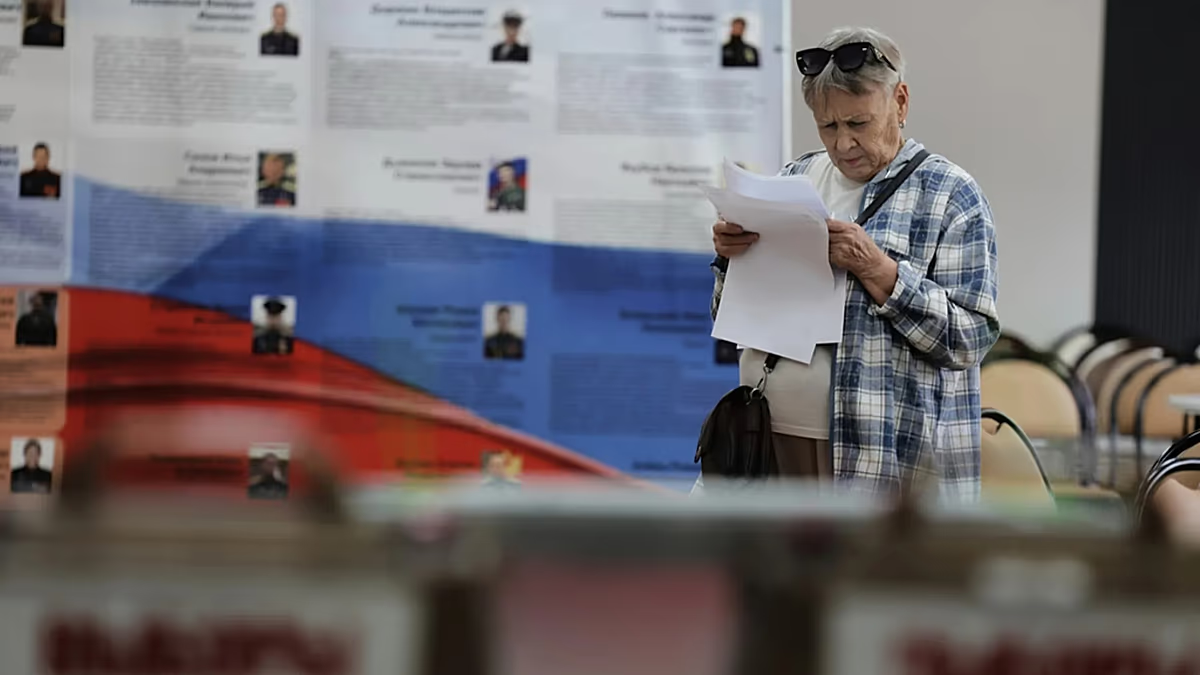
Russian citizens began casting their ballots on Friday in a three day election process that appears designed more as a display of loyalty than a genuine democratic exercise. With President Vladimir Putin entering his twenty sixth year at the helm, the political landscape has been scrubbed of any meaningful dissent. Only parties that explicitly back the Kremlin and the ongoing invasion of Ukraine are permitted on the ballot, leaving voters with choices ranging from the ruling United Russia party to the nationalists and communists. Notably, Yabloko, the last remaining publicly anti war party within Russia, was barred from participating despite a recent surge in popularity among younger generations.
Foreign diplomats and political analysts have characterized the proceedings as little more than a ritual intended to legitimize Putin’s grip on power. Observers point to a systemic use of state resources to inflate turnout and manipulate outcomes, citing tactics such as bussing workers to polls and steering employees toward government backed candidates. This atmosphere evokes memories of the Soviet era, where elections served not to challenge leadership but to prove citizen obedience. Meanwhile, the presence of nearly two hundred war veterans among the candidates serves as a calculated push by the Kremlin to promote a pro army narrative and recruit new soldiers for the front lines.
Beneath the surface of this managed stability lies a deep current of anxiety among the Russian populace. Despite repeated denials from Putin himself, many fear another wave of military mobilization similar to the one that sparked mass panic and exodus in 2022. These fears are exacerbated by recent Ukrainian drone strikes on domestic infrastructure, which some analysts believe have broken an unspoken agreement between the Kremlin and its people regarding how much hardship they should endure for the sake of the war effort. In cities like Moscow, there is an eerie lack of campaign energy, reflecting a society where open opposition is effectively criminalized.
The vacuum left by authentic competition is stark, as almost every major critic of the regime is now either imprisoned, exiled or deceased. Following the death of Alexei Navalny in an Arctic prison earlier this year, those resisting Putin from abroad have struggled to find common ground on how to react. While some urge citizens to vote against the ruling party as a form of protest, others argue that participating in such a skewed system merely validates it. For many Russians, however, politics has become secondary to survival as they navigate fuel shortages and economic instability under a parliament often mocked as nothing more than a rubber stamp for presidential decrees.