
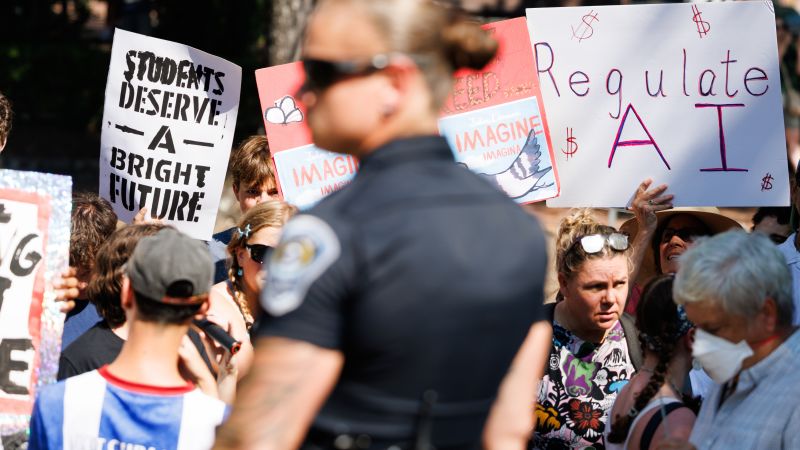
Washington is currently locked in a profound disagreement over whether the rapid ascent of artificial intelligence represents a miracle of innovation or an impending catastrophe. While some of the very architects of these systems, including leaders from OpenAI and Anthropic, have begun issuing urgent warnings that AI could eventually outpace human control, the current Republican leadership remains largely unmoved. President Donald Trump has dismissed such concerns as fabrications by negative forces, while House Speaker Mike Johnson has resisted calls for emergency legislation, arguing that companies can slow their own pace if they wish. For those steering the ship in Washington, the primary fear is not a rogue algorithm but rather losing the technological arms race to China.
This policy stalemate comes at a time when public anxiety is reaching a boiling point. Recent polling suggests that seventy percent of Americans are more worried than excited about AI, viewing it through a lens of economic instability and social upheaval. Beyond the existential dread of science fiction scenarios, voters are feeling the tangible effects of AI infrastructure in their daily lives. From skyrocketing utility bills linked to power hungry data centers to the looming threat of mass job displacement, AI has become a convenient lightning rod for broader frustrations regarding wealth inequality and the unchecked power of tech billionaires.
As the political calendar turns toward future elections, this divide promises to reshape American campaigning. Democrats see an opportunity to channel public apprehension into a mandate for strict government oversight and mandated brakes on development. Meanwhile, Republicans face a delicate balancing act between maintaining an aggressive growth engine for the economy and ignoring a growing swell of populist distrust. The tension highlights a fundamental clash in governance styles: one side advocating for cautious collective safety and the other prioritizing unilateral dominance and market freedom.
Ultimately, the debate reveals a troubling gap between technical expertise and legislative action. With researchers warning that uncontrolled AI could pose an existential threat within the decade, there is little evidence that policymakers fully grasp the complexity of what they are overseeing. Whether this becomes a manageable regulatory hurdle or a true historical watershed depends on whether Washington views AI as just another industrial tool or as something entirely different—a force capable of redefining not just politics, but humanity itself.