
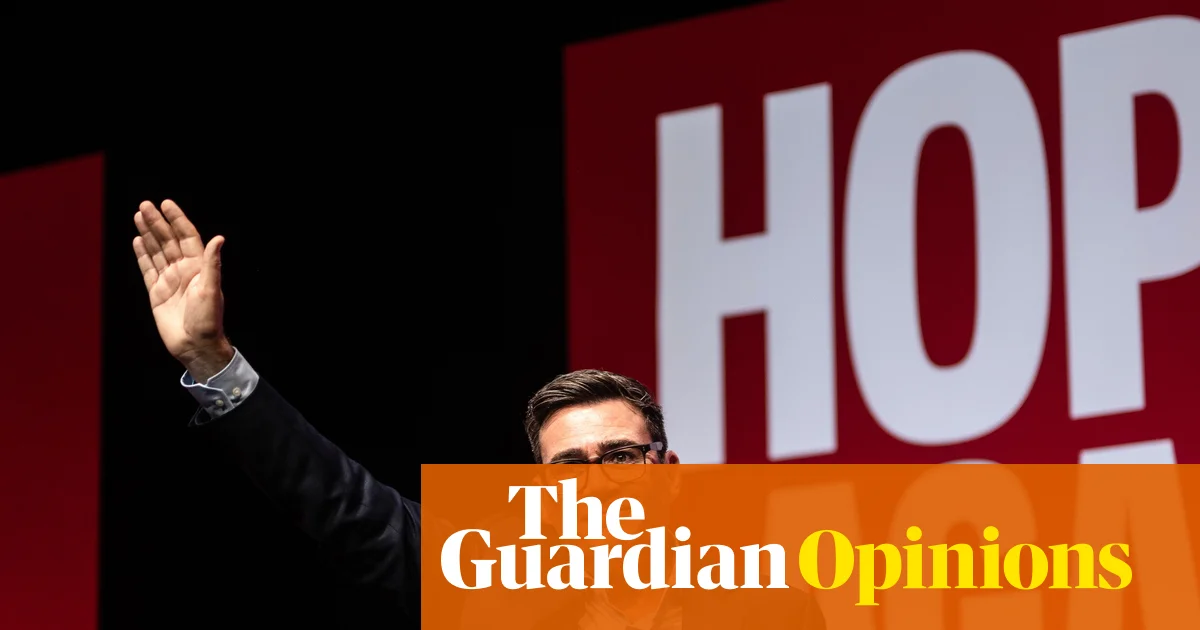
Andy Burnham chose to forgo the safety of a traditional leader’s speech during his appearance at the Labour conference, opting instead for a raw and unfiltered performance that felt more like an article of faith than a political address. While most politicians rely on carefully curated word salads and vague promises to soothe a home crowd, Burnham delivered something entirely unmediated. In a room already brimming with the hope of electoral victory, he pushed further, offering a level of honesty that bordered on political recklessness.
The atmosphere in Liverpool was electric, with Burnham operating on pure emotion rather than calculated rhetoric. There were moments of genuine vulnerability, including one where he choked up while speaking about his father, creating a rare moment of communion between a career politician and his audience. He seemed fully aware that he might be drafting one of the longest suicide notes in political history by burning through his capital so brazenly, yet he appeared driven by a need to remain true to his principles rather than fading into the background like recent predecessors.
His vision was expansive and intentionally devoid of gritty numbers or partisan bickering. Rather than using the platform to attack rivals, Burnham issued a rallying cry for national unity, suggesting a willingness to work across party lines for the common good despite how unrealistic such cooperation may seem given current political frictions. However, beneath the optimistic surface lay some sharp critiques; while he thanked Keir Starmer for winning the election, it felt like a perfunctory gesture toward a leader whom Burnham seemingly views as part of an older school of caution and failure.
Nowhere was this boldness more evident than in his willingness to tackle third rail issues that other politicians avoid for fear of losing votes. From proposing a shift from the triple lock pension system to a double lock and advocating for total electoral reform, to calling for a radical reset on Brexit and overhauling social care, nothing was off limits. It played out like a public therapy session where every systemic frustration was aired without redaction. By the time he finished, the crowd was practically rapturous, treating him not just as a politician but as one of their own walking among the faithful.